 Terra B1 interceptor drones
 KSR X33 uncrewed attack boat
 Atmaca anti-ship missiles
 INDIA
South Korea Presses India on Stalled $2.5B Biho Air Defense Buy
Hanwha Aerospace, Hanwha Systems, Korea Aerospace Industries, Korean Air, and Duksan Navcours joined the New Delhi meeting to talk with Indian officials.
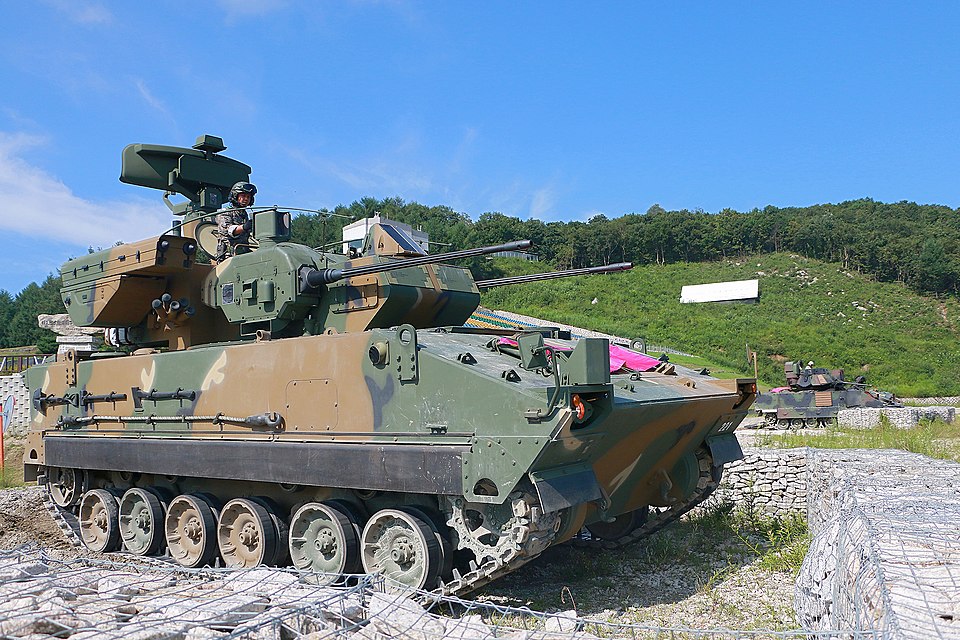
South Korea has put its Biho Hybrid air defense system back on the table with India, reopening talks on an Indian Army deal for 104 systems that was once valued at about $2.5 billion and then stalled.
Officials from Seoul’s Defense Acquisition Program Administration (DAPA) raised the Hanwha Aerospace-built system at the 10th Korea-India defense industry and logistics joint committee, held in New Delhi on September 29, DAPA said.
What Was Discussed
DAPA Vice Minister Kim Il-dong co-chaired the meeting with Dinesh Mahur, a senior defense production official at India’s defense ministry. The Korean side focused on steady progress on two programs: the Biho Hybrid, which it described as under discussion with India, and the K9 self-propelled howitzer already in Indian Army service, including long-term operation and maintenance support.
The two sides also talked about reviving a 2020 defense industry cooperation roadmap, running the KIND-X platform that links companies, investors, and universities in both countries, and joint research and development. The committee met as a follow-up to an April summit between the two countries’ leaders.
A Deal That Stalled
India’s interest goes back to an Indian Army requirement for a self-propelled air defense gun and missile system. The K30 Biho reportedly emerged as the only system to qualify in Indian trials, leading to plans for 104 units at an estimated $2.5 billion, The Economic Times reported at the time.
In field evaluations, the Korean system reportedly beat Russia’s Pantsir-S1 and Tunguska-M1 on accuracy against low-flying targets, mechanical reliability, price, and delivery timelines. The Russian bids were also said to face problems over offset obligations and lifecycle maintenance costs.
The purchase then stalled after Russian objections and as India pushed to build more of its weapons at home.
The System
The Biho Hybrid pairs twin 30mm automatic cannons with short-range surface-to-air missiles to hit low-flying threats such as helicopters and drones. It carries electro-optical fire control and target acquisition sensors. Hanwha has upgraded the design with better sensors, battlefield networking, mobility, and counter-drone features, and has shown updated versions for export customers.
Where It Stands
DAPA’s statement did not mention a price, a quantity, or a timetable, and India has not announced a decision. India’s push for domestic production was one of the reasons the deal stalled. Seoul appeared to address that point, saying the two countries would look beyond finished-product exports toward joint development and technology cooperation.

 FLASHPOINTS · 29 NOV
 FLASHPOINTS · 28 NOV