 KSR X33 uncrewed attack boat
 Atmaca anti-ship missiles
 Next Generation Corvettes
 SOUTH KOREA
South Korea Selects GE Aerospace LM2500+G4 Turbines for Six KDDX Destroyers
GE says the Korean navy has bought 163 of its marine gas turbines for 95 ships, and Hanwha Aerospace will assemble and test the new engines locally.
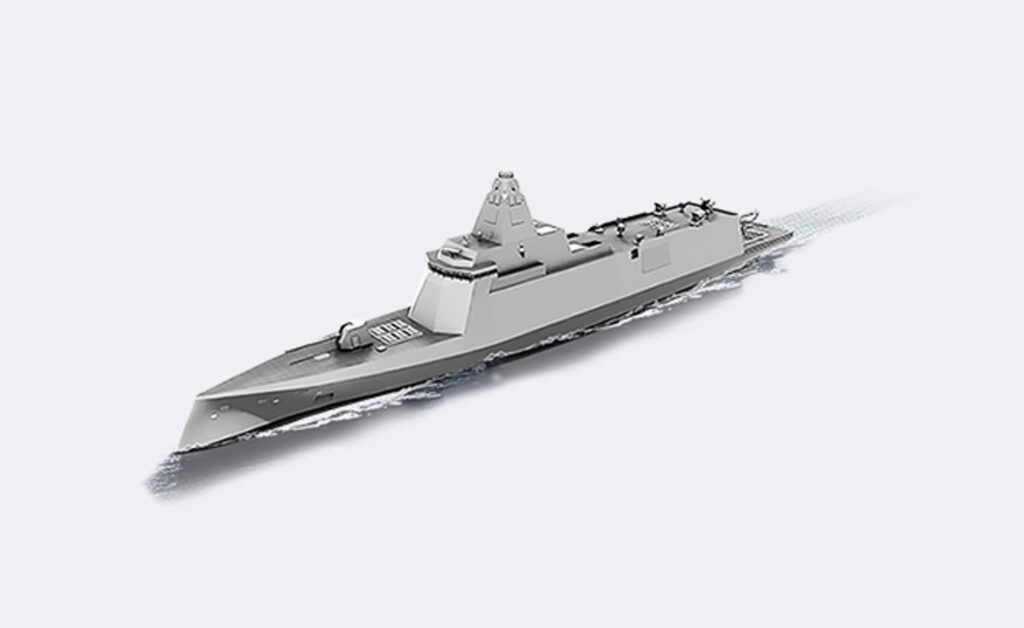
The Republic of Korea Navy has chosen GE Aerospace to supply 12 LM2500+G4 marine gas turbines for its six planned KDDX next-generation destroyers, with much of the work to be done by Korean licensed manufacturers.
Each destroyer will get two of the turbines, which will feed a full electric propulsion system, GE Aerospace said. The company did not disclose the value of the order.
Built in Korea
GE’s longstanding local partner Hanwha Aerospace, the prime contractor on the lead ship, will manufacture engine components and assemble and test the turbines in Korea. Hanwha will also provide in-country service support.
Busan-based NRTEC will make the lightweight composite enclosures that house the engines.
“The selection of GE Aerospace’s LM2500+G4 technology strengthens our strong collaborations in Korea and demonstrates our commitment to local manufacturing,” said Asha Belarski, vice president and general manager of GE Aerospace’s Marine Engines and Systems business. She called the move to full electric propulsion “a step toward the next generation of naval power.”
The deal extends a long relationship. GE said the Korean navy has bought 163 of its marine gas turbines for 95 ships to date.
A First for the Korean Navy
The KDDX will be the first ship in Korean Navy history fitted with a stealth-integrated radar and armed with both anti-aircraft and land-attack missiles. GE said the turbine and electric drive setup is meant to meet those power demands while offering better fuel economy, operational flexibility, room for future growth, and improved survivability and redundancy.
The Engine
Introduced in 2012, the LM2500+G4 keeps the same footprint as the base LM2500 but adds a zero-stage high-pressure compressor blisk and other changes that allow about 33 percent more airflow and higher firing temperatures.
It already powers Italian, French, Egyptian, and Moroccan FREMM frigates. The U.S. Navy selected it for its Constellation-class (FFG-62) frigates and for the land-based test site for its future DDG(X) destroyer.
The new composite enclosure weighs more than 2,500 kilograms (5,512 pounds) less than the steel version it replaces while keeping the same footprint. GE said it is 60 percent quieter and cuts wall temperatures by 25 to 50 degrees Fahrenheit (14 to 28 degrees Celsius), which improves conditions for the crew.


 SOUTHEAST ASIA · 18 NOV
 LOCAL INDUSTRY · 16 NOV